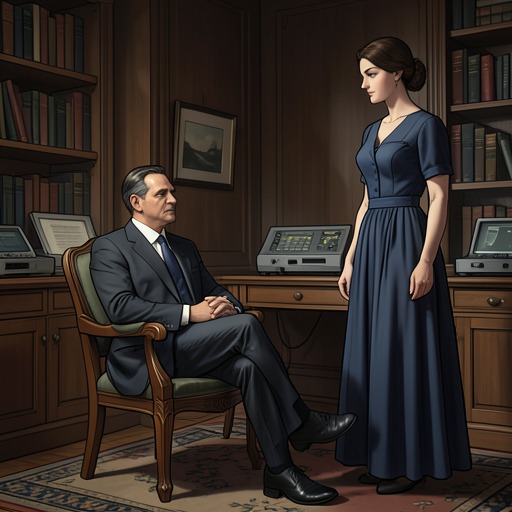
Me vuelvo a la mar
Gente que viene y ¡Bah!“Me vuelvo a la mar” is Bea’s father’s recurring declaration that he will leave the family for the sea. Repeated amid arguments and answered with weary familiarity by Ángela, it becomes less a literal plan than a comic refrain: an old escape route invoked whenever family life feels too turbulent, and a phrase the family already knows how to answer.
Meaning and First Use
The expression appears during a heated family exchange about a relationship, a child, and the possibility of recognizing paternity. Bea’s father interrupts the commotion with “¡Yo me vuelvo a la mar!” The abrupt announcement redirects the scene from its immediate dispute to his own familiar solution: leaving for the sea.
The words carry more than a threat of departure. Ángela later reminds him that he had been happy at sea, giving the refrain a personal association without establishing that he actually leaves. His reply, “¡Y ahí tendría que haberme quedado!”, turns the recollection into self-mocking regret. The sea is presented as an imagined alternative to the complications of family life, but the exchange remains comic rather than a narrated separation.
Repetition and Variation
The phrase returns when the family is discussing its relationships. Bea’s father insists that his marriage to Ángela works and warns that if it does not, he will go back to sea. Ángela answers that their relationship does work—unconventionally, but successfully—and tells him to stop threatening to leave because the family has heard the threat often enough. Her response makes the repetition explicit: the declaration is an established part of their shared domestic language, not a new decision.
The refrain also mutates into a joke about a nearer escape. After saying “Yo… yo… me voy al bar,” Bea’s father is asked, “¿Al mar?” He corrects the destination—“Al bar, al bar… a emborracharme…”—but the sea remains close enough in everyone’s mind to prompt the correction. The exchange turns his habitual wording into a comic misdirection: the promised exit changes from the sea to the bar, while the familiar impulse to get away persists.
Place in the Family’s Language
Across these scenes, the expression links marital reassurance, family conflict, and teasing. Bea’s father can invoke it at moments of tension, while Ángela can dismiss it as an overused threat and still affirm that their marriage works. The contrast is central to its effect: his repeated readiness to leave coexists with a relationship the couple describes as durable, if unconventional.
The sea therefore functions in the phrase as a recurring imagined alternative, not as an event the evidence shows him carrying out. Its return gives the family a shared joke with a small edge of frustration: everyone recognizes the threat, no one mistakes it for a fresh announcement, and even a plan to go to the bar is heard through the echo of the old refrain.